What the Latest Research Reveals About Postmenopausal Belly Fat in British Women Over 56 — The Behavioural Pattern Most Doctors Don’t Discuss
A research-based editorial review by our women’s midlife health team.
📋 In This Article
- Why Visceral Fat After Menopause Is a Different Health Risk
- The Postmenopausal Fat Redistribution
- Why Calorie Restriction After 56 Backfires
- The 30-Gram Morning Protein Threshold
- The Post-Meal Glucose Window
- The Gut-Hormone Axis (Estrobolome)
- Time-Restricted Eating for Women Over 56
- The Complete Evidence-Based Daily Protocol
- Frequently Asked Questions
Why Visceral Fat After Menopause Is a Different Health Risk — And Why UK Private Healthcare Now Takes It Seriously
When our editorial team began reviewing the published research on midlife body composition this past quarter at our desk in Reading, we weren’t expecting what we eventually found.
We are an editorial research team focused on women’s midlife health in the UK. We do not provide medical advice. What we do is read, summarise, and translate the peer-reviewed scientific literature into something genuinely useful for British women navigating the years between 56 and 68. Over the past quarter, we reviewed more than 60 peer-reviewed papers from institutions including King’s College London, McMaster University, the University of East Anglia, the Salk Institute, and the University of Limerick.
What this body of research consistently shows is that women between 56 and 68 — the late perimenopausal and early postmenopausal years — experience a set of physiological changes that the standard ‘eat less, move more’ advice does not address, and in some cases actively works against. The research points instead toward specific behavioural patterns that align with the new biology of this stage of life.
The question we set out to answer was simple: across all this research, what behavioural patterns appear repeatedly in the women whose waist circumference improves — and which conventional pieces of advice are quietly being overturned?
The honest answer surprised us. It was not about eating less. It was not about exercising harder. It was not even about a specific food group. It was about timing — and about a physiological shift, well-documented in the literature, that most women in this age group are never told about.

Before we share what we found, here is something we believe every woman over 56 should know first, because it changes how the rest of this conversation makes sense.
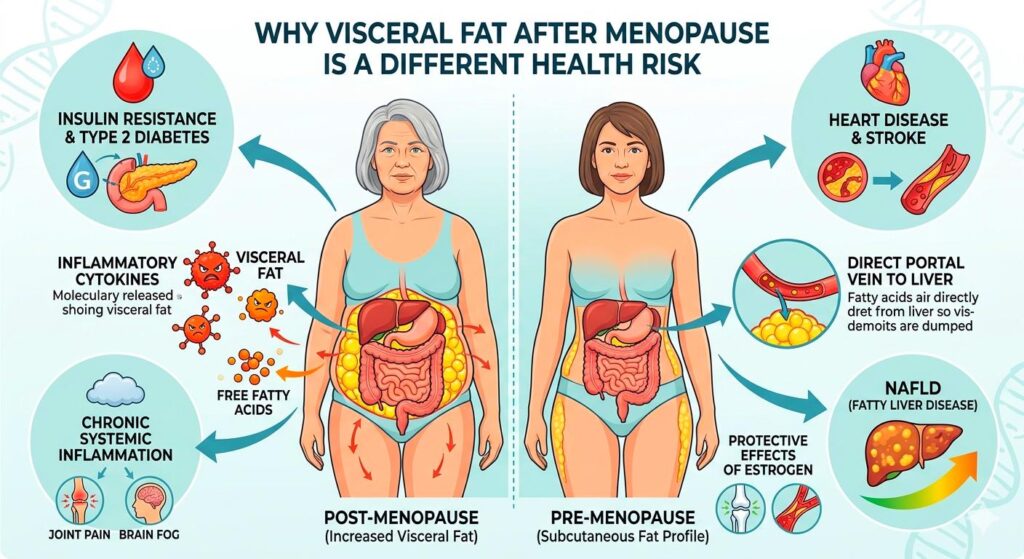
This is becoming increasingly relevant beyond personal health. UK private health insurers — including providers like BUPA and AXA — now factor central adiposity into their broader risk assessments, and the British Menopause Society has begun publishing more detailed guidance for clinicians on the metabolic dimensions of midlife women’s health.
Page 1 of 5